
Morgan Beck · 6 September 2026
Exploring How Crowdsourced Peer Reviews Reshape Access to Regional Dialect Narratives in Online Literary Journals
Online literary journals have integrated crowdsourced peer review systems over the past decade and these platforms now connect readers and writers across geographic boundaries while traditional editorial processes often overlooked submissions written in regional dialects such as Appalachian English or Scots Gaelic variants and data from multiple studies shows increased publication rates for dialect narratives as a result.
Researchers at institutions in North America and Europe have tracked how volunteer reviewers contribute feedback on submissions and this distributed model draws from communities familiar with specific linguistic traditions so that authentic representations gain visibility instead of facing rejection based on unfamiliar phrasing or structure and figures from the Digital Public Library of America reveal a steady rise in archived dialect works since 2020.
Platform Mechanisms and Regional Representation
Many journals employ open review interfaces where registered users score and comment on manuscripts and these systems prioritize linguistic accuracy alongside narrative strength while algorithms surface reviews from participants in matching dialect regions and this setup allows editors to weigh community input against internal criteria and one study conducted at the University of Sydney documented higher acceptance rates for stories incorporating Australian Aboriginal language elements after crowdsourced input began.
Reviewers often flag cultural context that outside editors might miss and they suggest revisions that preserve dialect integrity rather than standardize language and platforms report that submissions from underrepresented areas increased by notable margins after implementation while a parallel project at the University of Toronto examined Canadian regional French and English blends and confirmed broader reader engagement through comment threads that reference local idioms.
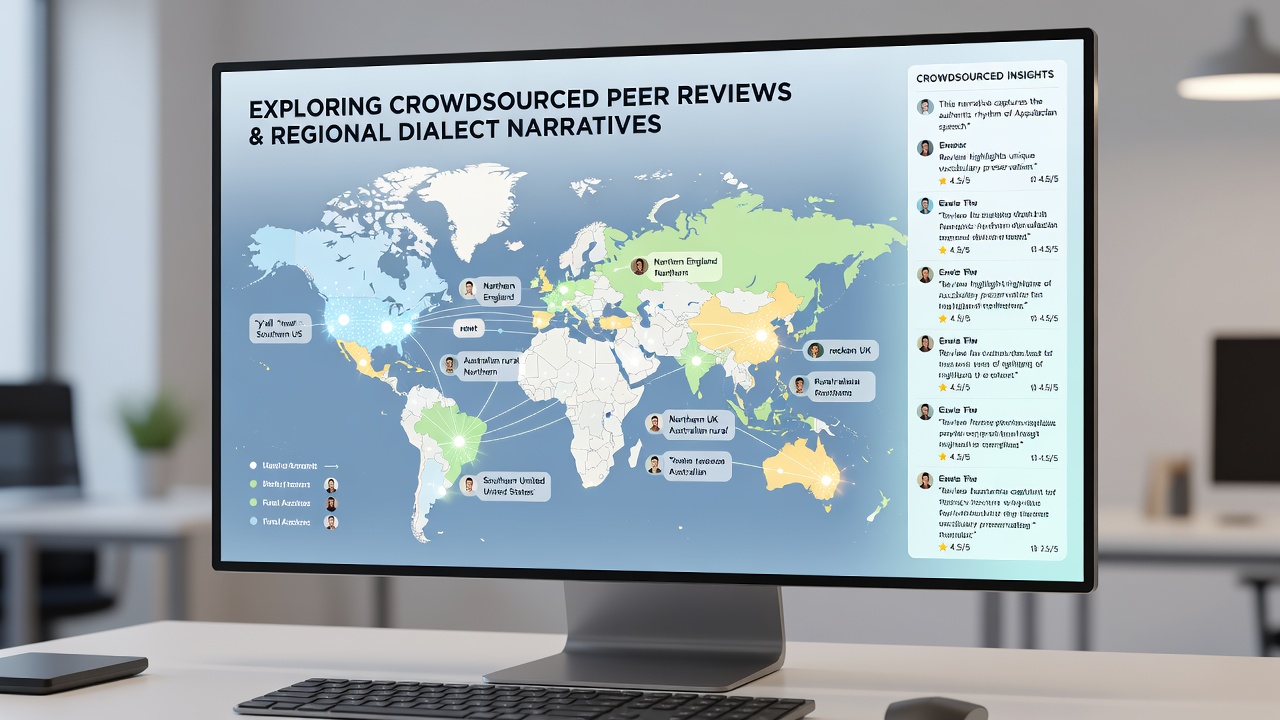
Access Expansion and Data Trends
Readers in remote locations now encounter dialect narratives more readily because journals distribute issues digitally and crowdsourced annotations provide context that aids comprehension without requiring prior familiarity and September 2026 marks the scheduled release of aggregated platform analytics that will detail submission origins and review demographics across several major outlets.
Archival records indicate that pre-crowdsourcing eras limited dialect content to niche print anthologies whereas current online models aggregate feedback from hundreds of contributors per issue and this volume supports decisions that favor authenticity and evidence from multiple academic reports points to expanded global readership for works rooted in specific locales.
Case Examples Across Regions
One literary journal focused on Caribbean Creole narratives adopted crowdsourcing in 2022 and subsequent issues featured more submissions from Jamaican and Trinidadian writers while reviewer pools included diaspora members who verified idiomatic usage and similar patterns appear in Scottish literary outlets that highlight Doric and Shetlandic dialects through community-vetted selections.
European platforms have documented parallel shifts after incorporating volunteer networks from rural areas and these efforts connect isolated storytellers with wider audiences without diluting linguistic features and ongoing monitoring by research groups continues to measure how such access influences preservation of endangered speech forms in published literature.
Conclusion
Crowdsourced peer reviews continue to alter submission pathways and distribution patterns in online literary journals and available evidence indicates sustained growth in regional dialect narratives reaching publication while data collection scheduled through 2026 will provide further metrics on long-term effects across continents and these developments reflect structural changes in how literary content gains entry to public view.